


Doing Hard Things and Why It Changes Everything

By Paul Ayres, THEFITPROFESSIONAL1, LLC
Executive Summary
There is a consistent and powerful pattern that emerges when you study performance across disciplines, industries, and time. Whether the source is Harvard Business Review, MIT Sloan Management Review, your own experience, or foundational thinkers such as Peter Drucker and W. Edwards Deming, the conclusion is remarkably aligned. Individuals and organizations that deliberately engage in difficult work and do so repeatedly with structure and intent develop a capacity that extends well beyond the original task.
This capacity is not limited to physical endurance or technical skill. It includes cognitive stamina, emotional regulation, decision confidence, and the ability to execute under pressure. Research from Angela Duckworth demonstrates that sustained effort toward challenging goals predicts success across multiple life domains. Work by Roy Baumeister shows that self-control strengthens through repeated use, creating a compounding effect that influences behavior far beyond the original point of effort. The longitudinal findings associated with Walter Mischel reinforce that disciplined behavior in one context often predicts improved outcomes in entirely different areas of life.
At the center of this process is the concept of deliberate practice, pioneered by Anders Ericsson. Deliberate practice transforms difficulty into a structured opportunity. It reduces uncertainty, increases familiarity, and builds the mental readiness required to execute effectively. Supporting research shows that individuals who prepare in this manner are significantly more likely to perform under pressure, not because the task becomes easy, but because they have trained themselves to engage with difficulty in a productive and repeatable way.
The implication is both simple and profound. Doing hard things, when approached through deliberate practice, makes future hard things more manageable and executable. This effect is transferable across personal and professional domains. It improves leadership effectiveness, enhances career progression, strengthens organizational performance, and contributes to a higher overall quality of life.
What follows is not a theoretical argument. It is a synthesis of research, observation, my experience, and practical application to complex problems. The objective is to demonstrate how this principle works, why it works, and how it can be implemented in a way that produces measurable results.

Doing Hard Things and Why It Changes Everything
Very recently, I spent a week at the Las Vegas Convention Center exhibiting for TheFitProfessional1 business to the heavy construction, mining, material processing, engineering, transportation, infrastructure, and logistics markets. It was a tough week.

That venue, in and of itself, is miles upon miles of corridors and over 2,000 exhibits. It is a challenge to take it all in. Every attendee walks the show looking for an edge to enhance the success of their business and career. Some find it, some don’t. But for certain, everyone covers a lot of ground. Prepping for this event was hard work. The execution is harder. If you have never worked a long tradeshow before, be warned. It’s a unique kind of fatigue. And most shows are under 3 days; this one is a bit shy of 5 days. My intent is not to pat myself on the back for this effort. Rather, to share some ideas regarding not just surviving but thriving in professionally challenging assignments. The training after high-intensity intervals on my mountain bike, the two months before, provided obvious fitness benefits, but also did a great job of coping with annoyances like sore feet and a stiff back generated by the requirement to greet and chat with professionals for eight-hour days. I was prepared. I know the discomfort, and I had zero concern about enduring it. This let me focus on contacts and business development to the best of my ability. A big deal? Well, yes. Especially if a person is not ready for the physical nature of an event like this, the physical discomfort of a long tradeshow can interfere with performance. Those road warriors and veterans of the tradeshow world would agree.
Have you had a particularly difficult assignment as of late? One where you were at a minimum not looking forward to it, and at a maximum, stressing over just how you were going to get the result and hold the rest of your job together?
Taking the time to prepare to accept the difficulty that awaits is part of the technique. It does you zero good to work to fool yourself somehow; the ‘hard thing’ is going to magically get easy. In fact, deliberate practice, or practice very focused on the task at hand with the intent to improve results, doesn’t make the task easy. But it mentally is easier to execute once practice is repeated and your mindset is prepared to endure. You must choose to endure the hard parts and, in your mind, discuss the positive business reasons that achieving the result will provide. This is where it starts, but there is so much more.
There is a phrase that has become increasingly common in conversations about performance, leadership, and personal growth. It is simple, direct, and often repeated without much explanation.
The phrase is this:

When we study performance across disciplines, we begin to see that difficulty is not an obstacle to success. It is the mechanism that produces it. This is not a philosophical position. It is supported by decades of research and reinforced by practical observation in business, athletics, military environments, and individual achievement. The consistent finding is that individuals who regularly engage in difficult tasks develop a capacity that extends well beyond those tasks. That capacity becomes a differentiator. That capacity also helps lower relative perceived effort, leading to better results, less fatigue, and a confidence that pushes through what must be done.
The work of Angela Duckworth provides one of the clearest starting points.

Her research on grit focuses on the combination of passion and perseverance applied over long periods of time. What is particularly important is not just that persistence leads to success in a specific area, but that it predicts success across multiple domains. Individuals who demonstrate the ability to sustain effort in one challenging pursuit are more likely to succeed in others. This is the first indication that there is a transfer effect at work. The great news, therefore, is that we can build this capacity within us. We can develop this relative superpower to apply as needed in not just work and career, but in all parts of our lives. It spills over. You can work on it on your mountain bike, and it supports that new start-up. You gain capacity. It’s as though your bottom performance capacity moves up.

This idea is reinforced by the research of Roy Baumeister, who studied self-regulation extensively.
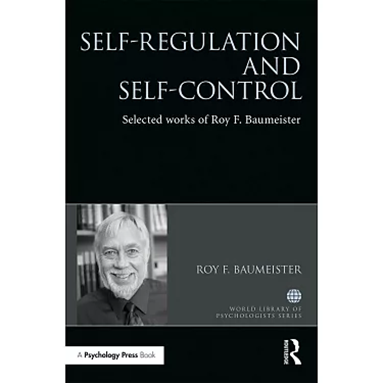
His findings suggest that self-control functions in a manner like a muscle. It can be strengthened through use, it can fatigue under excessive strain, and it becomes more capable with consistent training. The implication is significant. When an individual chooses to engage in a difficult task that requires discipline, they are not simply completing that task. They are strengthening a system within themselves that will influence future behavior across a wide range of situations.
The long-term studies associated with Walter Mischel further support this perspective.
Children who demonstrated the ability to delay gratification in controlled experiments were later found to have better outcomes in education, health, and career progression. While the original experiment has been debated and refined, the broader conclusion remains relevant. The ability to manage impulses and endure short-term difficulty in pursuit of a longer-term goal has far-reaching implications.
At this point, it becomes clear that doing hard things is not about the immediate outcome. It is about building a set of capabilities that carry forward. These capabilities include resilience, focus, emotional regulation, and the confidence that comes from having faced difficulty and moved through it. Over time, these qualities begin to define how an individual approaches challenges. The difficult task is no longer something to avoid. It becomes something to engage. Positive self-talk with regard to what is about to happen becomes a formidable prerequisite to the encounter. You understand difficulty is coming, you’ve experienced it before, and you have confidence you will again. You plow through, result achieved, and you move on to the next hard thing. It compounds or multiplies, and your capacity grows.
However, there is an important distinction that must be made. Simply encountering difficulty is not enough. Random exposure to hard situations does not guarantee improvement. The process must be structured, intentional, and designed to push capability in a progressive manner. This is where the concept of deliberate practice becomes central. We have deliberate and functional overreaching. This produces an adaptation. If we do too much, too fast, we risk negative repercussions. It's important to get the pace at which more difficulty shows up correct. So that we can adapt and recover, resulting in strength rather than burnout and weakness. Too much is too much. Part of the practice is to work to understand what the right amount of functional overreaching is.
The work of Anders Ericsson fundamentally changed how we understand skill development.

His research demonstrated that expertise is not primarily the result of innate talent, but of sustained, structured practice that targets specific areas for improvement. Deliberate practice involves breaking complex skills into components, focusing on areas of weakness, receiving feedback, and repeating the process until performance improves.
This approach directly affects how individuals experience difficulty. When a task is unfamiliar, it feels hard because it contains uncertainty. There are too many variables, too many unknowns, and too little structure. Deliberate practice reduces this uncertainty. It creates familiarity. It builds patterns of recognition. It allows the individual to approach the task with a level of preparedness that changes the experience entirely.
What was once perceived as difficult becomes manageable. Not because the task has changed, but because the individual has changed.
This distinction is critical. It explains why two people can face the same challenge and produce very different outcomes. One has trained for it. The other has not. The difference is not intelligence or potential. It is preparation.
Research compiled in meta-analyses, such as that conducted by Macnamara and colleagues, reinforces this point. While deliberate practice does not explain all differences in performance, it accounts for a substantial portion of them. More importantly, it highlights that improvement is not accidental. It is the result of a process that can be designed and executed.
In parallel, the work of Daniel Goleman brings attention to the role of emotional intelligence in performance.

The ability to manage stress, maintain focus, and regulate emotional responses under pressure is essential for effective execution. These qualities are not separate from deliberate practice. They are developed through it. When individuals repeatedly place themselves in situations that require concentration, discipline, and resilience, they build the mental framework needed to perform in demanding environments.
At this point, the connection becomes clear. Doing hard things, when approached through deliberate practice, builds both skill and readiness. It prepares the individual not only to complete the task, but to perform under the conditions that make the task challenging in the first place.
This has profound implications for professional life. In organizational settings, the ability to execute under pressure is often the difference between average performance and exceptional results. Companies that understand this do not avoid difficulty. They incorporate it into their systems.
Insights from organizations such as Deloitte, IBM, and Amazon consistently highlight the importance of stretch assignments, continuous learning, and capability development. These organizations recognize that performance is not static. It is built through experience, and that experience must include challenge. Functional overreaching becomes institutionalized in training programs and pushes professionals to higher performance outcomes. All organizations would be well served to establish their version of functional overreaching, or the stretch to get the adaptation to allow for excellent performance.
Leaders in these environments are expected to take on complex problems, make decisions with incomplete information, and operate at the edge of their current capabilities. This is not accidental. It is a deliberate strategy to build a workforce that can adapt, innovate, and execute in dynamic conditions.
The same principle applies at the individual level. A professional who consistently chooses the easier path may achieve short-term comfort, but will limit long-term growth. In contrast, a professional who systematically engages with difficult tasks builds a portfolio of experiences that expands capability. Over time, this leads to greater responsibility, increased opportunity, and improved performance.

There is also a personal dimension that cannot be ignored. The habits developed through deliberate engagement with difficulty influence not only career outcomes but also overall quality of life. Individuals who build discipline in one area often find that it affects other areas. A commitment to physical fitness can lead to improved mental clarity. A disciplined approach to learning can enhance confidence in decision-making. The effects are interconnected. This interconnectedness is what makes the concept so powerful. It is not limited to a single goal or objective. It is a system that influences how an individual operates across all aspects of life.
As this system develops, a compounding effect begins to emerge. Each difficult task that is completed adds to a foundation of experience. Each instance of deliberate practice reinforces the ability to engage with future challenges. Over time, the individual becomes more capable, more confident, and more effective.
This is the point where the gap between individuals becomes visible. It is not a gap that appears overnight. It is the result of accumulated decisions. One individual has consistently chosen to engage with difficulty. The other has not. The difference in outcomes reflects the differing approaches. This is the individual's decision. One that is executed over time with consistency. Like any muscle, if the professional stops working on the development of the capacity, it starts to erode and reduce.
Individuals must continually choose the hard thing, the path to challenge themselves and therefore grow. This in itself is a ‘hard thing’ and difficult to maintain over time.
Individual purpose comes into play. Aspirations fuel discipline, and that’s for a different newsletter. But it is so important. It is important to recognize that this process is not without cost. Engaging with difficulty requires effort, focus, and a willingness to experience discomfort. It also requires recovery. Research and practical experience both indicate that sustainable performance depends on balancing challenge with rest. Without recovery, the system breaks down. With it, the system strengthens.
The question then becomes how to apply these principles in a practical and repeatable way. The answer is not found in a single action, but in a series of consistent choices. It begins with identifying the areas that matter most, both personally and professionally. It continues with breaking those areas into components that can be practiced deliberately. It requires a commitment to engage with tasks that stretch current capability, and a willingness to evaluate performance honestly.
Over time, this approach transforms how difficulty is perceived. It is no longer something to avoid. It becomes an essential part of the process.
This shift in perspective is perhaps the most important outcome. When individuals begin to see difficulty as an opportunity rather than an obstacle, their behavior changes. They seek out challenges. They prepare for them. They execute with greater confidence. The link between aspirations and objectives becomes clear and further motivates action. This is where performance begins to separate.
It is also where leadership emerges. Leaders are not defined solely by their ability to make decisions or communicate vision. They are defined by their ability to operate effectively in complex and demanding situations. This requires the same qualities that are developed through deliberate engagement with difficulty. It requires resilience, focus, and the capacity to execute under pressure. Leaders deliberately practice. At least the great leaders do.

Organizations that cultivate these qualities at scale create a competitive advantage. They build teams that are capable of addressing complex problems, adapting to change, and sustaining performance over time. This advantage is not easily replicated. It is the result of a system that integrates challenge, practice, and development.
At the individual level, the opportunity is equally significant. By adopting this approach, a professional can influence their own trajectory. They can move beyond reactive behavior and take a proactive role in their development. They can build the skills and mindset required to pursue higher levels of responsibility and impact.
The path is not complicated, but it is demanding. It requires consistency. It requires intention. It requires a willingness to engage with tasks that are not immediately comfortable.
The reward for this effort is not limited to improved performance. It includes a greater sense of control, increased confidence, and the ability to navigate complexity with clarity. An overall calmer and more certain state of being. These are qualities that extend beyond any single role or objective. They contribute to a broader sense of effectiveness and fulfillment.
Conclusion
As we consider the implications of this research and its application, the conclusion becomes clear.
Doing hard things is not a temporary strategy. It is a foundational approach to development. When combined with deliberate practice, it creates a system that builds capability, enhances performance, and produces results that compound over time.
The decision to adopt this approach is ultimately a personal one. The research can inform it. Experience can reinforce it. But the execution depends on individual choice. The individual must choose the direction, the subject, and the genre to apply. What are the objectives?
There is an opportunity available every day, in every role, and in every organization. It is the opportunity to engage with difficulty in a way that builds capacity rather than avoids it. It is the opportunity to practice deliberately, to prepare effectively, and to execute with intent.
Those who take this approach will find that their ability to handle complexity improves. Their confidence in decision-making increases. Their performance becomes more consistent. Over time, these changes accumulate, creating a trajectory that is difficult to match.
The alternative is also clear. Avoiding difficulty may provide short-term relief, but it limits long-term growth. It reduces exposure to the experiences that build capability. It narrows the range of situations in which an individual can perform effectively.
In the end, the distinction between these two paths is not subtle. It is reflected in outcomes.
The call to action is straightforward:
Identify the areas where growth is needed.
Engage with the tasks that challenge current capability.
Apply deliberate practice to build skill and readiness.
Repeat the process consistently.
Focus on the outcome you desire. Repeat.
Consistency and discipline endure; results show up.
This is how improvement occurs. This is how performance is elevated. This is how careers are built, and organizations are strengthened. There is no easy button. There is a path to your objective. And each person must choose to be deliberate toward their objectives.
The work is demanding, but the return is significant. It is not limited to a single achievement or milestone. It is reflected in a sustained ability to perform at a higher level.
That is the advantage. And it is available to those who choose to pursue it.
So next time you have that killer project, tradeshow, or initiative, be ready. Start doing hard things now. It's not the quantity of hard things; it's more about the magnitude of what you are after. To truly stretch in one area of your life or career will lead to capability adaptations that will help you in the other areas of your life. Get started and hang with it. If you think you need some insight and help with this, don’t be afraid to reach out at paul@thefitprofessional1.com or leave a note and your email at my website, and I’d love to get to work with you! www.thefitprofessional1.com
Get after it!
Professional Bibliography
Doing Hard Things and Why It Changes Everything By Paul Ayres, THEFITPROFESSIONAL1, LLC Copyright © 2026 THEFITPROFESSIONAL1, LLC, owned by Paul Ayres
Foundational Research: Hard Things, Grit, and Transferable Capacity
Duckworth, Angela L., Peterson, Christopher, Matthews, Michael D., & Kelly, Dennis R. “Grit: Perseverance and Passion for Long-Term Goals.” Journal of Personality and Social Psychology, Vol. 92, No. 6, 2007, pp. 1087–1101.
Baumeister, Roy F., Bratslavsky, Ellen, Muraven, Mark, & Tice, Dianne M. “Ego Depletion: Is the Active Self a Limited Resource?” Journal of Personality and Social Psychology, Vol. 74, No. 5, 1998, pp. 1252–1265.
Baumeister, Roy F., & Tierney, John. Willpower: Rediscovering the Greatest Human Strength. Penguin Press, 2011, pp. 1–291.
Mischel, Walter, Shoda, Yuichi, & Rodriguez, Monica I. “Delay of Gratification in Children.” Science, Vol. 244, No. 4907, 1989, pp. 933–938.
Mischel, Walter. The Marshmallow Test: Mastering Self-Control. Little, Brown and Company, 2014, pp. 1–304.
Deliberate Practice and Mental Readiness
Ericsson, K. Anders, Krampe, Ralf T., & Tesch-Römer, Clemens. “The Role of Deliberate Practice in the Acquisition of Expert Performance.” Psychological Review, Vol. 100, No. 3, 1993, pp. 363–406.
Copyright © 2026 THEFITPROFESSIONAL1, LLC, owned by Paul Ayres

Comments